
The AI Price War: Can Silicon Valley’s Billions Ever Pay Back?
In the past I’ve written about the scale of investment in AI, as well as companies that are being landed with enormous AI token bills. Recent developments from China may be disrupting that story, just like when Deepseek first smashed it’s way on to the scene. We may be about to see the sky-high compute costs that left many businesses nursing massive AI bills lly be coming down.
According to Axios A new wave of competitive open-weight models originating out of China, led by players like DeepSeek, is undercutting US tech giants on raw API pricing. DeepSeek's latest iteration offers performance metrics comparable to top-tier models from OpenAI and Anthropic, but at a fraction of the cost per million tokens.
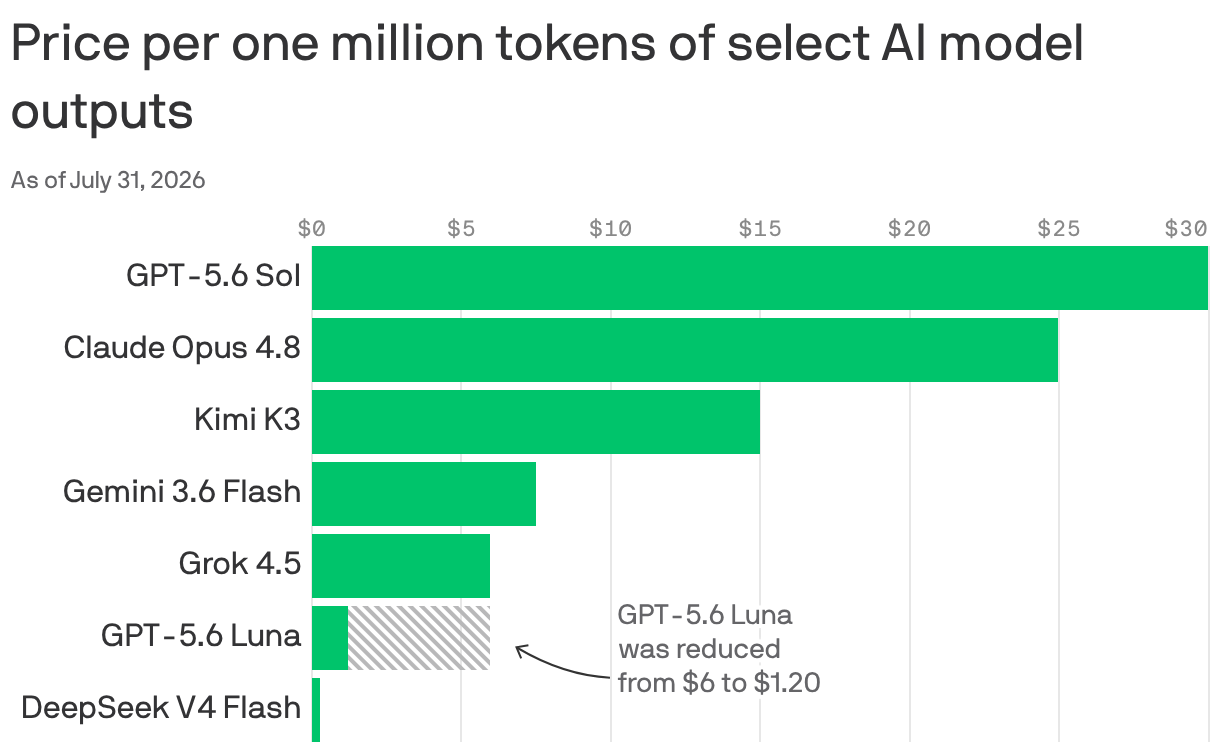
DeepSeek V4 Flash forcing a rethink on Token pricing for the whole market.
This pricing shift signals that the AI infrastructure race to the bottom has officially begun.
For enterprise buyers, commoditised intelligence is a massive win. Lower token costs make automated workflows viable for companies that previously found large language models prohibitively expensive to run at scale.
For the Silicon Valley tech giants, it creates a structural financial nightmare.
Microsoft, Meta, Google, and Amazon are committing hundreds of billions of dollars to capital expenditures, buying up Nvidia hardware, and building massive data centres. This investment thesis relied on a clear assumption: that foundation model providers could maintain high API margins while customers remained locked into their proprietary ecosystems.
When equivalent intelligence becomes available at near-zero marginal cost, those margins collapse.
If cheap Chinese open-source models can turn raw AI into a basic commodity, the big tech giants are potentially in trouble. The sheer volume of tokens sold will struggle to offset the plummeting unit price. Capital expenditure of this scale requires long-term pricing power to yield a return, but we’re already seeing ChatGPT, and Gemini models slashing prices to keep up.
This leaves a glaring question for the market: how do these big AI companies return a profit to their investors if the underlying tokens hold virtually no value? When the core product becomes a cheap commodity, the math behind multi-billion-dollar infrastructure bets become hard to justify, or break down completely.
