
From Zero to 100 Billion: The Unprecedented Rise of OpenAI Ads
The digital advertising landscape is currently undergoing its most significant shift in decades. For the first time, the hierarchy of the big tech giants is being reordered, while a new challenger is attempting a sprint that would make the early days of Google look like a slow walk.
At BOND Digital, we are closely watching these metrics because they aren't just numbers on a spreadsheet; they represent a fundamental change in how your brand reaches its audience in 2026.
Meta Takes the Lead
A landmark shift is forecasted for 2026. Meta is expected to surpass Google in worldwide digital ad revenue for the first time ever. Meta's projected revenue of $243.46 billion would give it a 26.8% market share, narrowly edging out Google's 26.4%.
While both platforms continue to grow aggressively - with estimates suggesting both will hit the $300 billion mark by 2028 - the momentum has clearly shifted toward Meta's automation-heavy ecosystem. Tools like Advantage+ and AI-generated creative are pulling more budget into Facebook and Instagram because they are delivering better performance through sheer algorithmic efficiency.
OpenAI: The $100 Billion Sprint
While the incumbents battle for the top spot, OpenAI is moving at a pace that is frankly unprecedented.
OpenAI is eyeing $2.5 billion in ad revenue this year, with a target of $100 billion by 2030.
For context, it took Google nearly 20 years to reach the $100 billion milestone. ChatGPT aims to do the same in roughly eight years.
In May 2026, OpenAI solidified its ambitions by launching a beta self-serve Ads Manager. It introduces CPC bidding and conversion tracking, allowing advertisers to move beyond managed agency partnerships and buy directly on the platform.
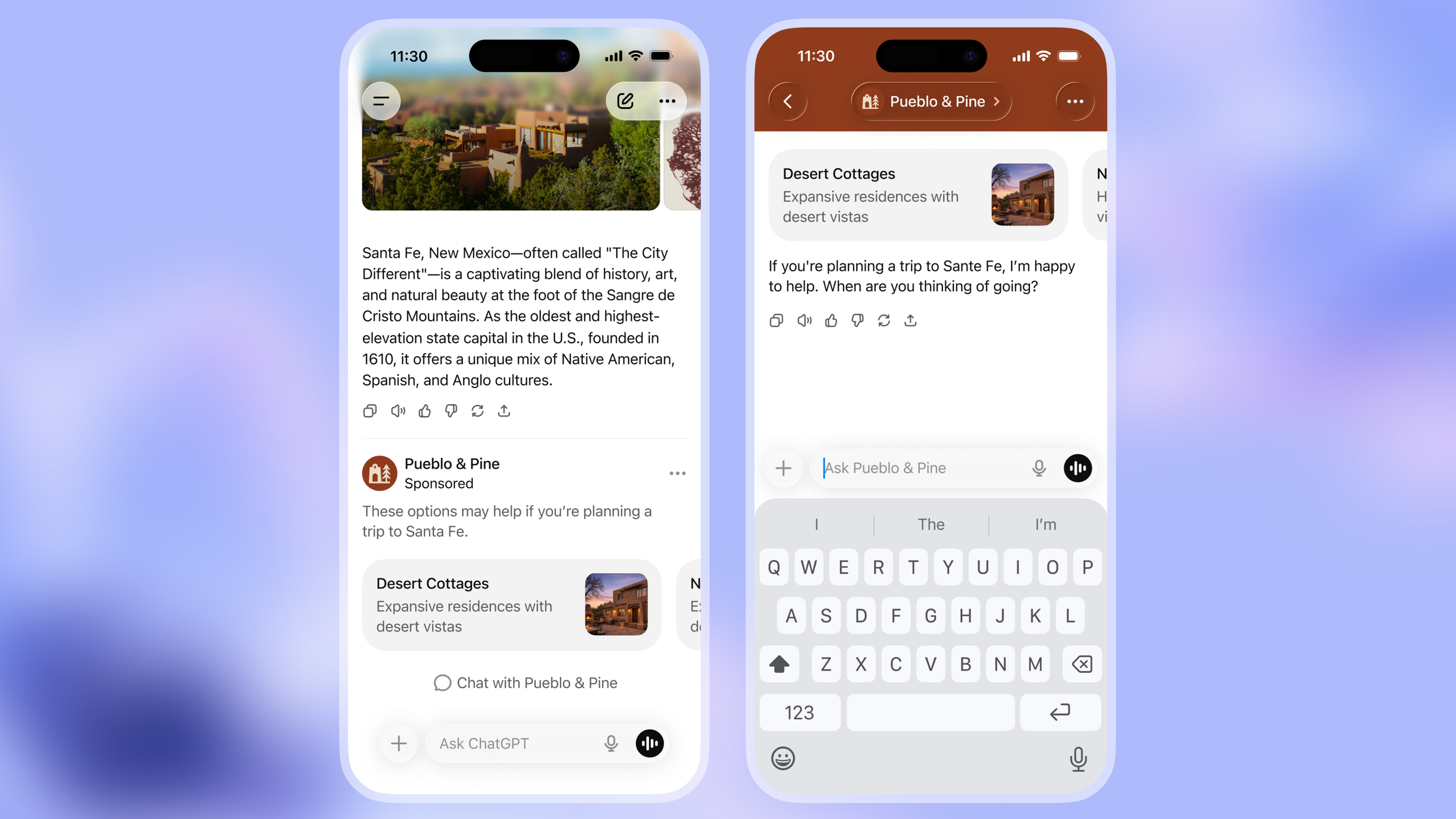
Example Ads
Challenges to the Service: Will Ads Break ChatGPT?
The biggest question for users and brands alike is how this transition from a tool to a media platform will affect the actual experience.
Does ChatGPT remain popular if it is full of ads?
The risk of user backlash is high if ads feel intrusive or manipulative. However, OpenAI is betting on context. Ads are designed to match the current conversation topic in real-time, appearing as sidebar content or post-response suggestions rather than interrupting the flow of the answer.
Do subscribers still see ads?
As of mid-2026, the policy is clear: if you pay, you don’t see ads. Subscribers on Plus, Pro, Business, and Enterprise plans remain ad-free. Ads are currently targeted at adult users on the Free and Go plans in the U.S., with a rollout starting in the U.K., Japan, and Brazil.
Will answers be weighted toward the highest bidder?
This is the most critical hurdle for trust. OpenAI has committed to a policy called Answer Independence. This means advertisers cannot pay to rank higher in a response or alter the AI's actual advice. Sponsored content is clearly labeled and kept in a separate box at the bottom or side of the screen.
Watch closely and test if you’ve got the budget.
The shift from keyword search to contextual conversation is a massive opportunity, but it requires a change in strategy.
Experiment with the Ads Manager: With self-serve access opening up and entry minimums dropping to around $50,000 for many pilots, now is the time to test how conversational intent differs from social scrolling
Focus on High-Intent Categories: Conversational ads perform best where users are already in a decision-making mindset
Demand Transparency: As a brand, your value in an AI world is built on trust. If the lines between the right answer and the paid answer begin to blur, the platform's value for everyone will collapse.
